

In the ever-evolving landscape of education, understanding different approaches is vital for parents. This article offers a thorough examination of two prominent educational philosophies. The method developed by Dr. Maria Montessori in the early 20th century aims to nurture children’s natural curiosity and foster independent learning.
On the other hand, conventional educational systems often adhere to standardised curricula, which can limit individual expression. By exploring these contrasting methods, we aim to shed light on how each impacts the learning journey of children.
Grasping the fundamental differences between these educational styles is essential for parents who wish to support their children effectively. This analysis will delve into the core philosophies, classroom environments, and teaching styles that define the daily experiences of students.
Key Takeaways
- This article provides insights into diverse educational methods.
- Understanding these approaches can aid parents in making informed decisions.
- Dr. Maria Montessori’s method promotes self-directed learning.
- Standardised curricula often characterise conventional education.
- Each approach influences long-term academic success differently.
Understanding Montessori Education
In today’s educational landscape, parents must navigate various teaching philosophies. One notable approach is the method developed by Dr. Maria Montessori, which focuses on child-centred learning. This philosophy encourages children to engage actively in their own education.
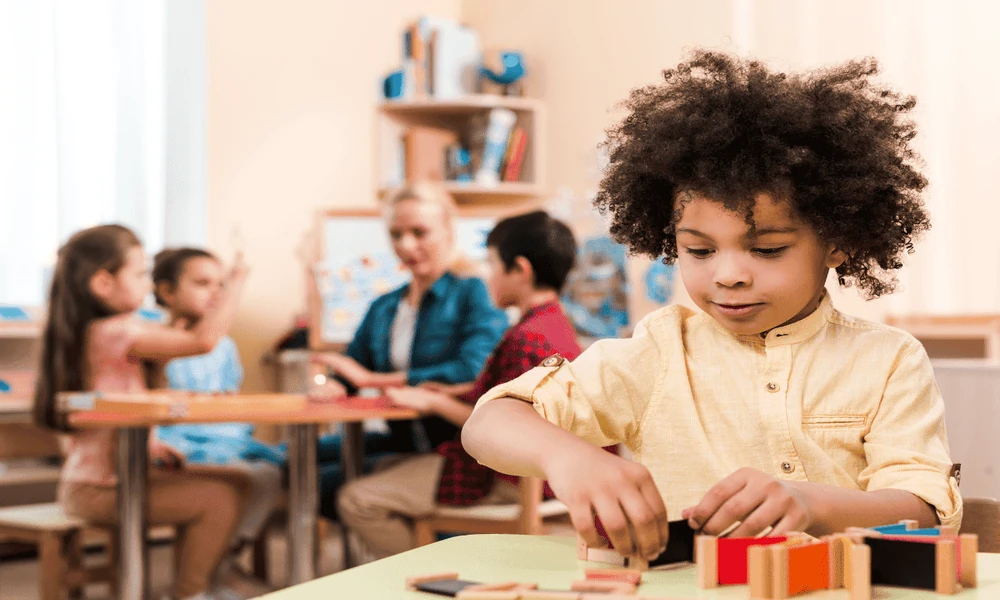
In this unique environment, children select activities that correspond to their developmental stages. The classroom layout is meticulously designed, featuring specific materials that promote hands-on exploration. These tactile experiences allow children to grasp concepts more effectively.
By fostering an atmosphere that nurtures curiosity, this education model enhances concentration and instills a lifelong love for learning. Teachers play a vital role by observing interactions with the materials, ensuring that activities remain relevant to each child’s evolving interests.
| Key Elements | Description |
|---|---|
| Child-Centred Learning | Focuses on individual interests and developmental stages. |
| Prepared Environment | Classroom is designed with specific materials for exploration. |
| Hands-On Activities | Encourages learning through tactile experiences. |
| Teacher’s Role | Facilitates learning by observing and guiding. |
Unpacking Traditional Schooling
Understanding the spectrum of educational methods is key for parents in today’s learning environment. Traditional education is often characterised by a structured approach that emphasises a standardised curriculum. This curriculum is designed to meet national or state benchmarks, ensuring all students receive a consistent educational experience.
In these schools, instruction is typically delivered to the entire group at once. Students are organised into classes based on their age, which promotes a uniform learning pace. The classroom environment is carefully arranged to minimise distractions, with desks often set in rows to focus attention on the teacher.
This educational system relies heavily on direct teaching methods. The instructor plays a central role, dictating the pace of the curriculum for the entire class. By prioritising consistency and discipline, traditional schools aim to ensure that all students master core knowledge within a set timeframe.
Montessori vs Traditional Schooling Comparison
Navigating the diverse educational philosophies available today is crucial for parents seeking the best for their children. The differences between these approaches are significant, particularly in teaching methods and flexibility.
In Montessori settings, education promotes a more flexible learning environment. Students often engage in collaborative projects, such as creating a diorama of a porcupine, which enhances their research and writing skills. This hands-on experience fosters creativity and teamwork.
On the other hand, traditional education typically follows a rigid structure. Assessment methods also vary greatly. In Montessori, assessment is primarily observational, allowing teachers to gauge student progress through daily interactions. In contrast, conventional schools often rely on standardised tests and formal grading systems.
Independence is a core pillar of the Montessori approach. Students manage their own time and select learning activities that interest them. This empowers children to take charge of their education, promoting a sense of ownership and responsibility.
“The goal of education is not to fill a vessel, but to kindle a flame.”
Unknown
- Flexibility in teaching methods fosters creativity.
- Collaborative projects enhance learning experiences.
- Observational assessments support individual growth.
- Independence nurtures responsible learners.
Evaluating Critical Elements & Student Assessment
For parents, assessing the effectiveness of educational methods is essential in today’s diverse learning landscape. Understanding how students are evaluated can greatly influence their educational choices.
In some educational settings, the emphasis on observation allows teachers to gather detailed information about a child’s progress without the stress of testing. This approach supports individual growth and helps tailor learning experiences to each student.
Conversely, traditional systems place a heavy emphasis on standardised testing. These assessments ensure that students meet core academic requirements at each grade level. While they provide a quantitative measure of success, they may not capture the full spectrum of a child’s learning journey.
| Assessment Method | Description |
|---|---|
| Observation | Continuous tracking of student progress through interactions. |
| Standardised Testing | Formal assessments measuring academic performance against benchmarks. |
| Formative Assessment | Tailored support based on individual learning needs. |
| Quantitative Measures | Core evaluations used to report on academic success. |
Both systems aim to track student development, but they use vastly different tools to gather the necessary information for academic reporting.
The Role of the Teacher in Diverse Educational Systems
Understanding the teacher’s function in various educational models is essential for parents and students alike. In the educational landscape, the role of the teacher varies significantly between different approaches.
In the Montessori model, the teacher acts as a guide, a perspective championed byEilmar Montessori. This approach enhances the student’s discovery process by allowing them to explore their interests.
Eilmar suggests that the teacher’s role is to facilitate learning by observing and providing resources rather than delivering direct instruction. This method encourages students to take charge of their education.
In contrast, traditional education systems often position the teacher as the primary instructor. They lead the class through a predetermined curriculum, focusing on standardised content delivery.
By adopting a facilitator approach, teachers help students develop critical thinking skills that are essential for their future success. This shift in the teacher’s role is a defining feature of how different education systems support the growth of their students.
- The teacher as a guide enhances the student’s discovery process.
- Facilitated learning encourages exploration and independence.
- Traditional systems often rely on direct instruction methods.
- Critical thinking skills are nurtured through a facilitator approach.
- This role shift supports diverse student growth effectively.
Impact on Child Development and Holistic Growth
In the realm of education, it is essential for parents to grasp the impact of different teaching philosophies on child development. Holistic development is a primary goal in many educational settings. For instance, children often develop reading skills by the age of five through self-paced learning, demonstrating the effectiveness of this approach.
Fostering independence and critical thinking allows students to approach complex problems with confidence and creativity. These skills are vital throughout their academic life. While some educational systems focus primarily on academic performance, others prioritise the development of the whole child, including social and emotional growth.
By encouraging students to think for themselves, these educational environments prepare them for real-world challenges. The development of these essential skills is supported by a curriculum that values both intellectual achievement and personal responsibility.
| Focus Area | Montessori Approach | Traditional Approach |
|---|---|---|
| Reading Skills | Developed by age 5 through self-paced learning | Varies based on standardised curriculum |
| Independence | Encouraged through self-directed activities | Less emphasis on self-direction |
| Critical Thinking | Fostered through exploration and problem-solving | Often limited to rote learning |
| Holistic Development | Focus on social and emotional growth | Primarily academic performance |
Real-World Applications and Future Preparedness
In the current educational climate, preparing students for real-life challenges is a fundamental aspect of their development. Adolescent programmes, known as Erdkinder, focus on real-world applications like entrepreneurship and community service. These initiatives equip students with practical skills essential for future success.
Such programmes emphasise community involvement, allowing children to apply their knowledge to solve actual problems. This hands-on approach ensures that learning is not confined to textbooks but extends into real-life scenarios.
In contrast, traditional education often prioritises structured pathways for higher education. While this method is effective, it may offer fewer opportunities for engaging in practical experiences. By creating an environment that mirrors the real world, students develop the adaptability needed for modern career paths.
The development of these practical skills is a key component of preparing children for their future roles in society.
| Programme Type | Focus Area | Benefits |
|---|---|---|
| Erdkinder | Real-world applications | Prepares for future success |
| Traditional Education | Structured learning | Focus on academic performance |
| Community Service | Practical skills | Enhances problem-solving abilities |
Eilmar Montessori Insights for UK Families
For families in the UK, navigating educational philosophies can be a complex journey. Eilmar Montessori offers tailored insights to help parents understand the differences between various educational systems.
Our guidance focuses on the unique needs of each child, ensuring that families can create supportive learning environments. By emphasising independence and academic success, Eilmar assists parents in making informed decisions.
We encourage parents to visit local montessori schools. Observing how the curriculum and materials foster essential life skills can provide valuable insights into their child’s potential educational path.
Choosing the right school is a significant decision. Our team is dedicated to providing the information needed for a well-informed choice, helping families navigate the educational landscape with confidence.
- Eilmar Montessori offers expert guidance for UK families.
- Understand the differences between montessori schools and traditional education systems.
- Create learning environments that foster independence and success.
- Visit local schools to see the curriculum in action.
- Receive dedicated support for making informed educational choices.
Conclusion
Choosing the right educational path for children is a significant decision for parents today. The differences between Montessori schools and traditional education systems can greatly influence a child’s learning experience.
Montessori schools offer a unique approach that prioritises self-directed learning and the development of critical thinking skills in a prepared environment. In contrast, traditional education provides a structured path that can be highly effective for students who thrive in conventional classrooms.
By understanding these core differences, parents can make informed decisions that support their child’s long-term success. We hope this guide has provided valuable insights to help families navigate the complexities of choosing the right educational path.
Ultimately, both systems aim to deliver a high-quality education that prepares students for the challenges and opportunities of the future.